PIP-CAT Scans of Pervious Concrete
Dr. Neithalath’s presentation was on his research on the effect of mix design on pore structure and infiltration performance. Currently, the state of the art is rife with trial and error which ends up, at worse, with pavement failures, and best, an inconsistent mix. He wants to really understand how different aspects of the pervious concrete mix affect the different performance attributes. In this way, he wants to be able to dial in a pervious mix, with the exact attributes required for the ideal functioning of the installation.
The key feature of pervious concrete is the porosity, which we are all familiar with. Permeability is linearly related to porosity, and while that is obvious, it forms a helpful and fundamental baseline for 1 aspect of pervious concrete as a hardscape. Other aspects of pervious concrete are less well understood and they include types and seriousness of particle retention or clogging; oil retention, as some are considering pervious concrete as a bio-filter; strength and fracture, for structural considerations; as well as how mix design informs the size, type and structure of the voids. Dr. Neithalath is working to understand how all of these factors come together to form computational performance models for consistent designable pavements. In turn that would create a matrix of variable that could be controlled to create very precise mix designs for producers and installers.
My favorite part of Dr. Neithalath’s presentation was the video he presented of a pervious concrete cylinder in a CATscan, going all the way throughout, such that the void patterns were completely observable. Below you can see the video. I found the whole thing hypnotizing. What do you think?
To see more about Dr. Neithalath’s work, you can go to his faculty page here.
Pervious In Paradise - a summary look back


(‘View from the Hotel’ photo credit: Bob Banka)
Pervious in Paradise was a great conference. There were great presentations, solid attendance and wonderful networking! And every night, FIREWORKS!! Well, those might have been for the SeaWorld guests, who were adjacent to the conference site, but we enjoyed it nonetheless!
As we get materials and permission, we will be posting briefs on a few of the presentations. There were some fantastic new ideas, ongoing development of existing ideas and industry knowledge getting more refined. Highlights included
- pervious concrete site and pavement design with Michael Hein P.E. and Chris Estes, ASLA,
- notes from the Puget Sound with Andrew Marks P.E.,
- some truly innovative applications of pervious concrete with Muhannad Suleiman, Ph.D.,
- great modeling of voids and their implication with Narayanan Neithalath, Ph.D. P.E.
- discussions of fibers and silica fume with John Kevern Ph.D. P.E. LEED AP
There were many good speakers, and solid content throughout. More soon, and we are already looking forward to the next conference! Did you go? What did you think? Your comments are always appreciated!
Pervious Concrete Dynamic System Modeling
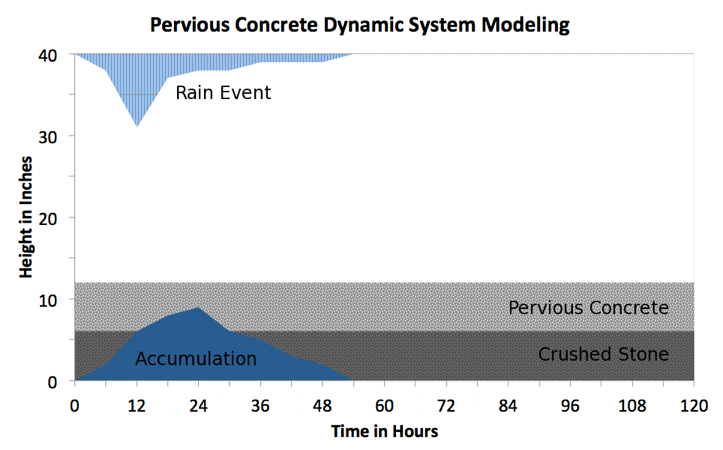
We have been working with architects, engineers, homeowners and municipalities to really explain how pervious concrete is a comprehensive storm water mitigation device. It has proven difficult to help people to wrap their heads around how allowing water to soak in to where it falls, using pervious concrete, is a viable storm water management strategy - so we have started to use Dynamic System Modeling as a tool to help explain what is happening in a pervious concrete slab, and how much water it can infiltrate over time.
When we use the concept of infiltration over time, pervious concrete systems provide huge capacity, far exceeding most climate’s most intense storm events. That is most easily demonstrated using a software modeling system. This allows insight as to a system’s capacity, and informs design, to ensure that the pavement and drain rock base will meet or exceed the required storm water infiltration amounts.
We have more information about this on our Pervious Concrete Dynamic Systems Modeling page, or you can contact us for more information!
CSU East Bay has a new Concrete Testing Lab
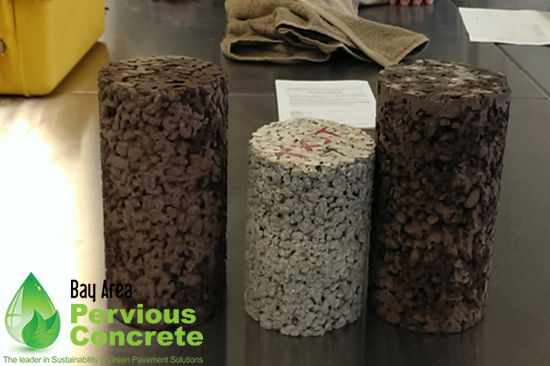
David had taken some samples at a recent pour and wanted to get them tested. Fortunately, Cristian Gaedicke, Concrete Materials Professor at CSU East Bay, had a new lab with brand new equipment to try out. We headed over for a tour and a testing field trip. Below are some photos of our compression test. We also did a void and density test but I hadn’t started taking photos at that point. Below you will see Cristian sawing off the top of the samples, to make them flat for capping.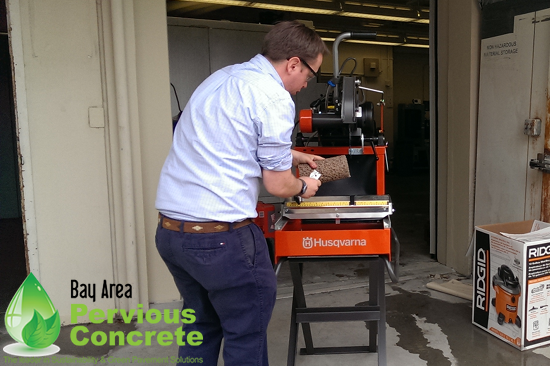
Next, we capped the 2 samples in sulfur, which makes them totally -perfectly- flat. That is also the way we have tested all of the rest of our samples, so we can keep our data consistent. The sulfur is heated in an industrial-type crock pot, under a hood for total ventilation. The green corner piece is the mold that sets the final edge so it is exactly at 90 degrees. 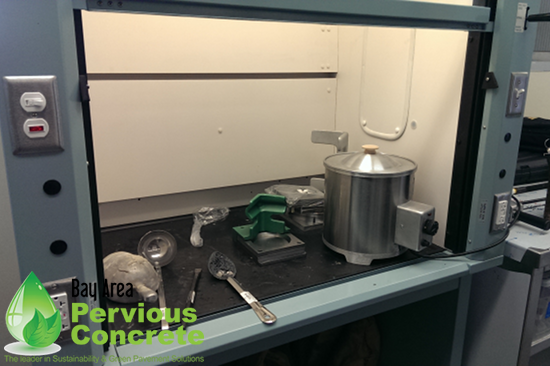
David stirs the melting sulfur chips. Since the lab was pretty new, the sulfur pot hadn’t been used yet!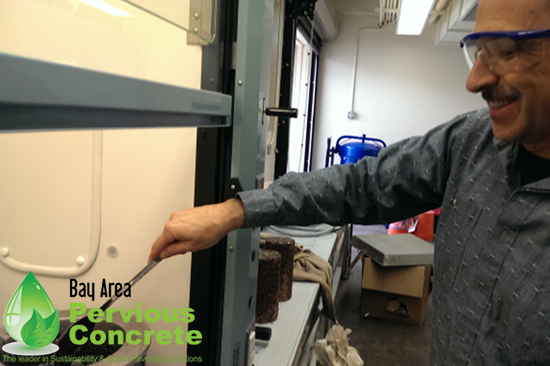
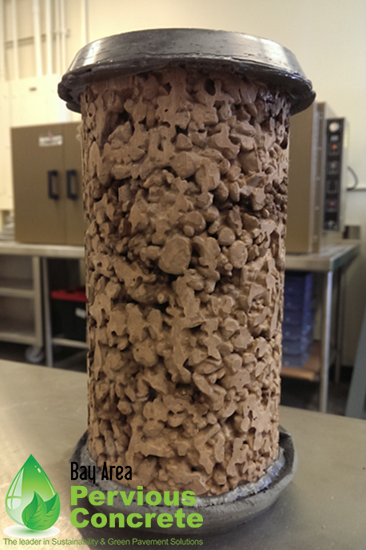
Once the 2 samples were capped, they were put into the crush test. This measures the PSI load of the sample. Below you can see the sample in the crushing machine. 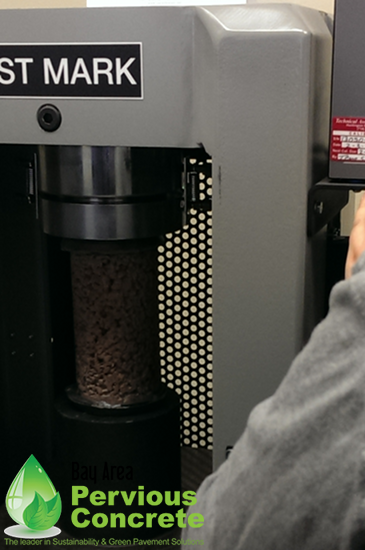
I am taking copious notes, while Cristian is making sure the machine works. 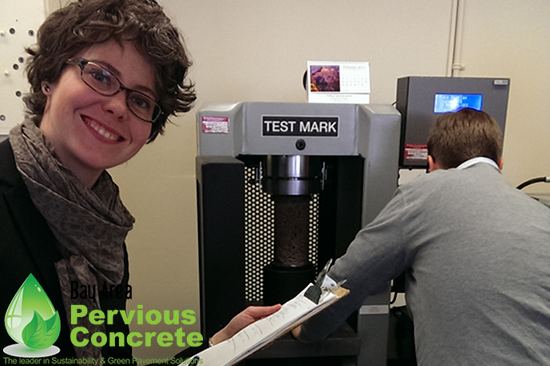
David is also taking notes as the test is being set up.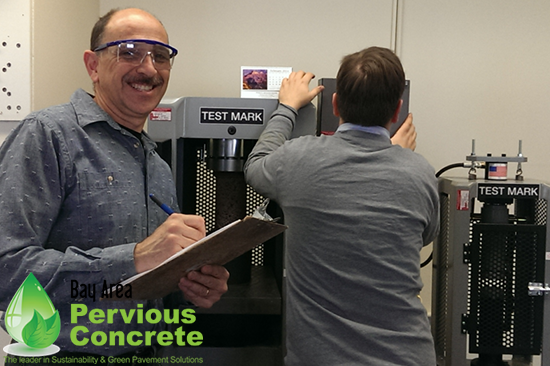
David and Cristian compare notes, and discuss the results. They review the smashed cylinders, seeing the pattern and reviewing paste adhesion in this mix. 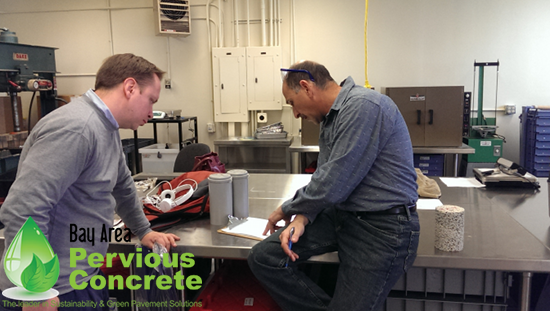
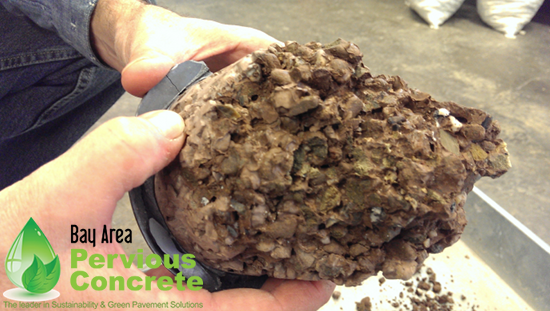
David is very happy with the results!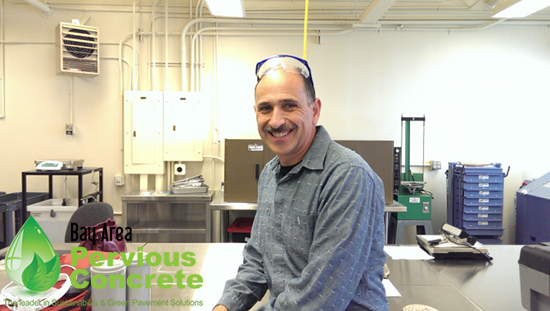
You can see that both cylinders had very consistent crush pattern.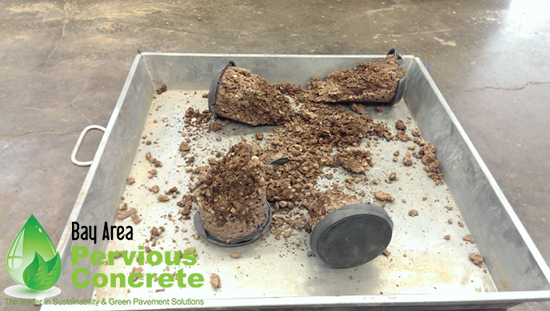
The whole crew, minus the photographer! 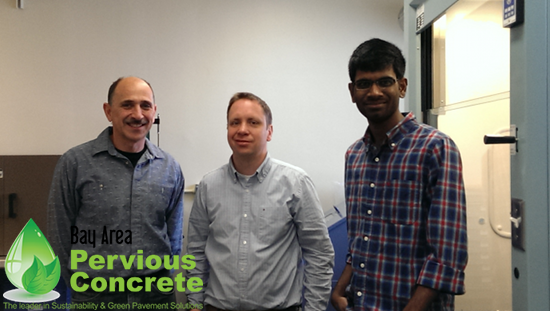
Pervious in Paradise is coming up!
It is time again for the most glorious of the pervious concrete conferences - The NPCPA Pervious in Paradise! It is where many of the pervious concrete thinkers and doers get together to exchange ideas and enjoy a new beautiful location - this time in San Diego.
We are looking forward to it particularly as BAPC’s David Liguori will be discussing reinforced pervious concrete and how rebar is not ever an appropriate reinforcement technique for pervious concrete. You can see more of the speakers here. We invite you to join us > Click here to register!
To get you all more excited about the conference we have some of the photos from the last Pervious In Paradise here!

Pervious Concrete and Maintenance - Your Questions Answered!
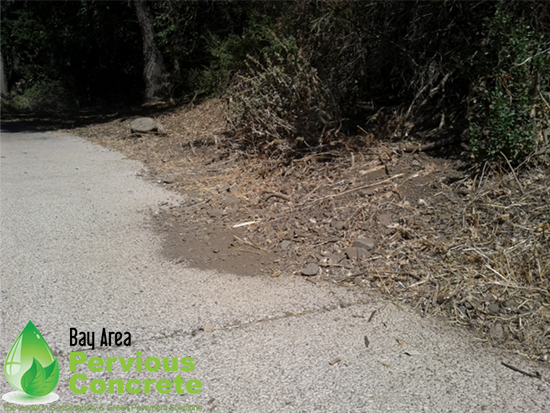
Recently, maintaining pervious concrete has come up several times in a week, prompting this blog post. The good news is that this conversation is happening. The bad news is that some people who are not on board with pervious are using an ill-informed maintenance opinion to shape their judgement. We here at Bay Area Pervious Concrete would like to clear up a few of the misconceptions around maintenance.
Firstly, we have found the relevance of maintenance is tied directly to the porosity of the slab itself. A healthy infiltration rate for a slab of pervious concrete is 250-1000 inches per square foot per hour. That ensures that even if the slab was 99% clogged, and the 5 year storm event was 3 inches in 24 hours (as we have here in the Bay Area), that slab would easily be able to absorb that entire storm. So at 99% clogged, the slab would take in 2.5 inches - 10 inches of stormwater per hour per square foot!
Secondly, here are three helpful resources to help with installing a good slab, maintaining it and the fixing a worst case scenario:
1) In order to make sure you get your healthy infiltration rates, an experienced and qualified contractor is required. We have performance based specs that you may review, so that you can be sure to get a good contractor and get a great pervious concrete installation! We also have a BAPC PolishedTM Pervious Spec that we will send at your request.
2) Regular maintenance that can be done, if there is a budget and a desire for a plan. We have put together a maintenance manual that we give to clients at their request when we finish work for them. This gives an idea what you can anticipate, allows one to set up a maintenance schedule, and has resources to call if clogging does occur.
3) Pervious concrete can recover porosity after clogging over years as shown from a research paper from Florida that came out a few years ago. The paper shows several slabs of unmaintained pervious ranging in age from 6 to 20 years old that were able to recover significant infiltration after a pressure washing, vacuuming or a combination of both - after YEARS of neglect. So, no maintenance, no problem!
Do you have any unanswered questions about maintenance and pervious concrete? Submit them here, and we may add them to this post!
USGBC Greener Builder - a fantastic conference!

There were good options for every panel, but as pervious concrete sub-contractors, we went to the subcontractor panel, hosted by John Home and Jeff Swinyer of Rudolph and Sletten, pictured below.
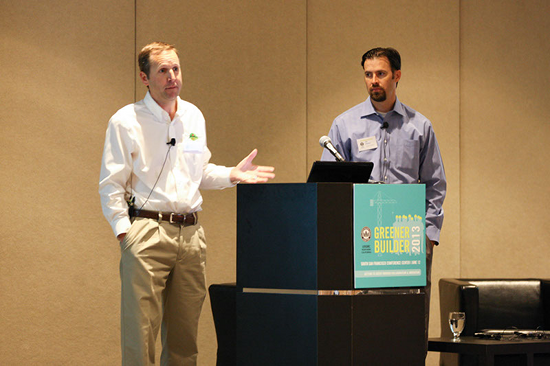
Lauren, pictured below, was interested in the drive toward clear performance specs to allow for differentiation at the sub-contractor level. As a pervious concrete subcontractor, we differentiate ourselves with our embrace of leading edge technologies for mix design and installation. Unfortunately, many current specs don’t reflect the progress in the installation, mix designs, equipment and curing materials that has developed in the last few years.

The next panel we attended discussed Environmental Product Disclosures (EPDs), a labeling system that discloses the resource footprint of the many materials that go into the built environment. The panel also included the next iteration, the Health Product Disclosures, which discloses the materials and chemicals that have been proven or correlated in causing health problems for humans.
Central Concrete, a sponsor of the event, has been heavily involved in the EPD project for disclosing the materials for the concrete industry. Below is a photo of the panelists from this panel.

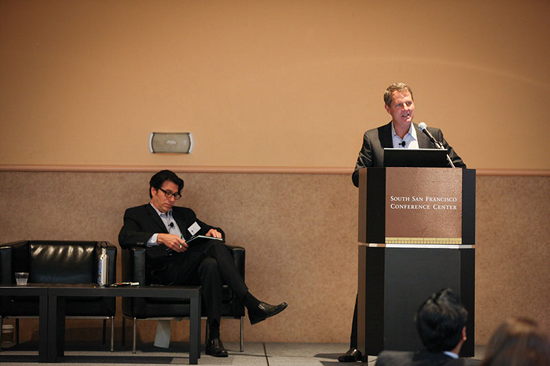
The last panel of the day went over Net Zero Energy buildings with John Andary and Scott Shell, pictured below. It was a fascinating look at what is currently possible with technologies now: buildings that use as much energy as they make. The building case studies discussed also illustrated how livable and workable these spaces were, with thought for passive heating and cooling. Many of the designs features windows that bounced daylight far into the building envelope, as well as fresh air ventilation. It was a wonderful talk, even though their topics stayed primarily inside the building envelope.
The final speaker, Jason McLennan, pictured below, gave a wonderful talk on self limits. His talk really stood out for his candor and optimism. For a young guy, has accomplished quite a bit in the green building spaces. Currently he is pioneering the Living Building movement.
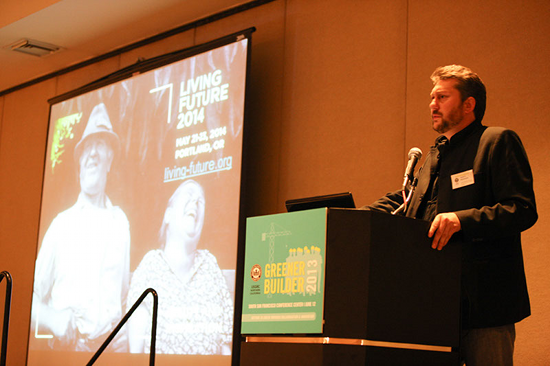
After his talk, Jason McLennan was joined by George Salah, of Google, and David Gottfried of the USGBC. They discussed everything from George’s living-building home construction project to Jason’s motivation to do the work that he does: “I give a shit.” That was wonderful.
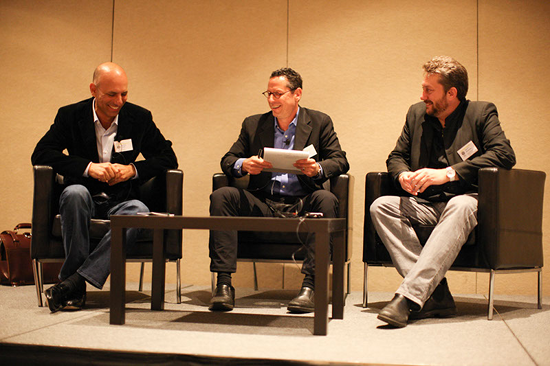
FInally, after it was all over, we found that there was a fantastic array of beers, wine and snacks to round out the day’s networking. It was a great event, and one we will look forward to attending next year!

A BIG thank you to Charlie Nucci, who took these photos at the event. You can find more about Charlie and his work at his website here.
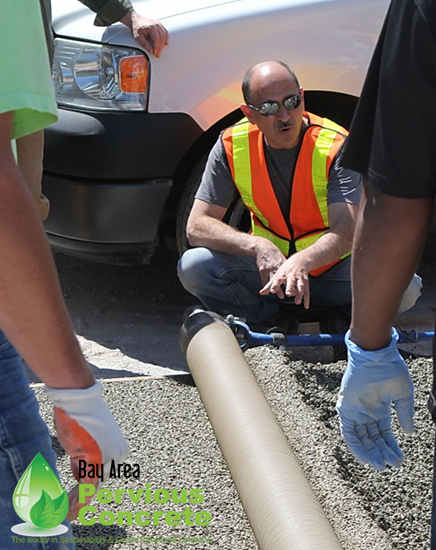
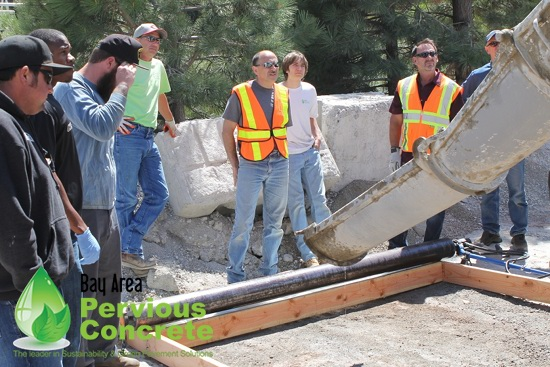
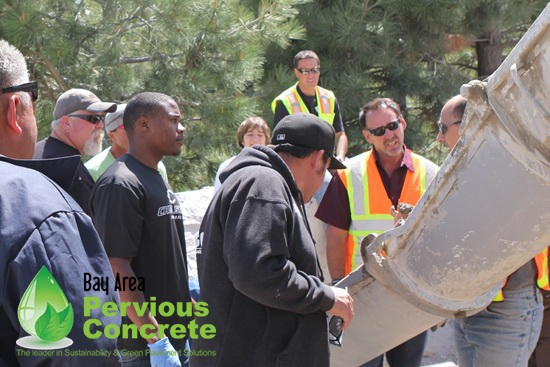
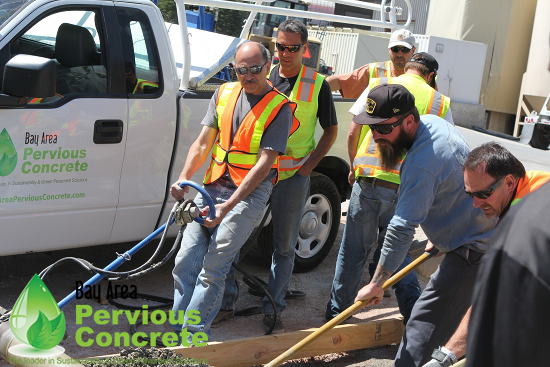
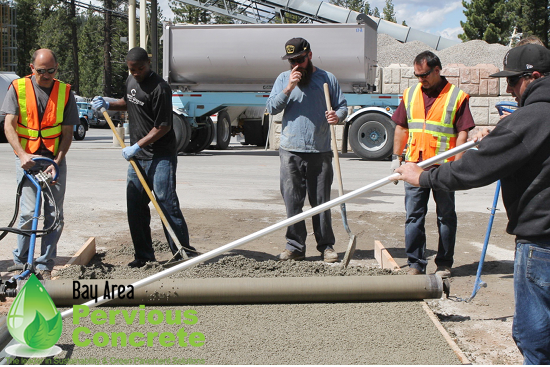
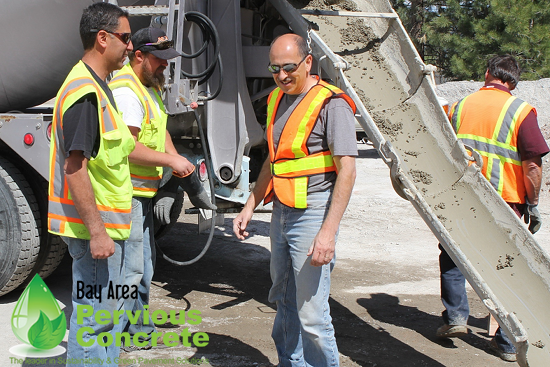
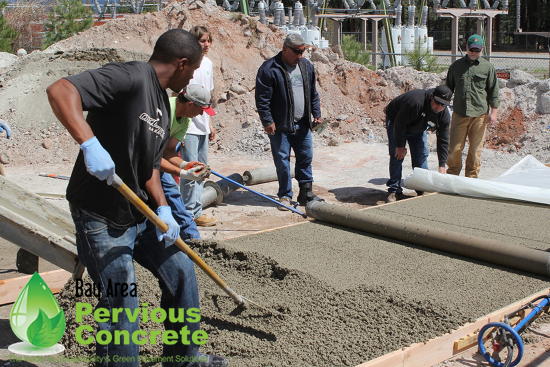
NRMCA Technician Training in Truckee- A Success!
Graniterock Quarry Tour - with Pictures!!
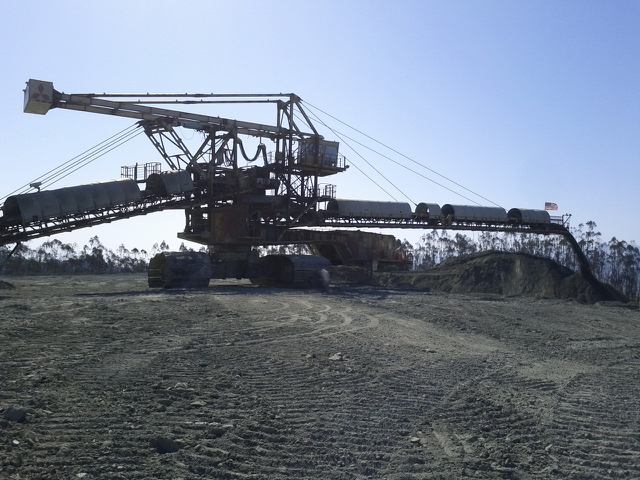
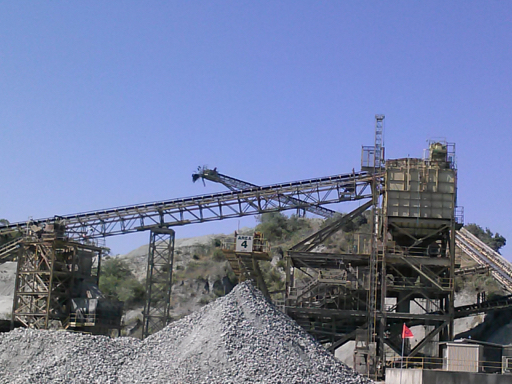
Big Bill(pictured above) was at the end of a 3mile conveyor belt bringing material from the waste end of the crushing processing to the spreader. The wheels were at least 10 feet in diameter! It was a massive machine! The material being spread looked like moon dust!
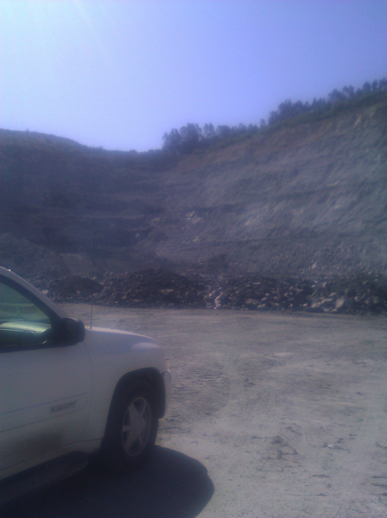
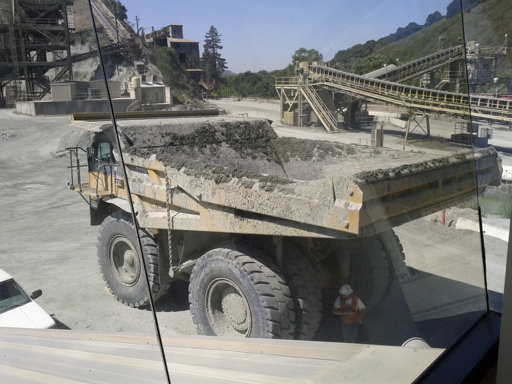
After leaving Big Bill we went into the quarry. You could see the step-like traces of material that had been removed. The terraces started at the top of the hill and went rather deep, below sea level! There was this massive truck (pictured above)that was moving the 'raw' rock and rubble close to the initial crushing machine (picture below). The crushing machine was in the quarry and it was even more massive then Big Bill the spreader! Here are a few photos of the team with the crusher. It was not running at the time, I would imagine it would be deafening! From the large initial crusher, another conveyor, shorter then the 3 miler, takes the material to the processing yard.
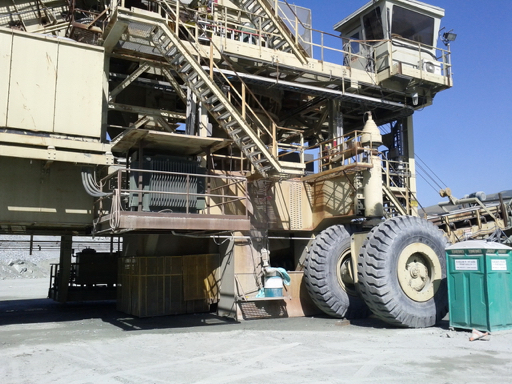

The material on the initial conveyor is then sorted into two sizes (big, for dry processing, and smaller, for wet processing) before being further sifted, crushed and rinsed to final product sizes and blends. The processing yard was a maize of conveyors, buildings on stilts (the crushing/processing/screening) and piles of material. Going into their control tower, we could see the levels of complexity and organization to keep all of that machinery moving that went unseen in the maize outside the windows. Even further beneath the surface of the processing yard was another conveyor in a tunnel beneath the main stockpiles, to allow for high control of the custom blends and product development.
Graniterock's newest addition to the quantitative analysis even had this fabulous quality assessment program that noted the size of final aggregate moment to moment to ensure consistency of the final product. They could, in real time, plumb their data and understand how consistent their product was, and make appropriate adjustments to bring it back into line. That type of feedback allows the quality team to be responsive to current inventory as well as give the operations team insights as to how well their processes are processing. It was a fantastic set-up, although I may be a data geek.
It was a fantastic tour of a great facility. We learned a lot about the aggregates that we use frequently in the Peninsula as well as how it gets to us. Really good quality rock makes even better pervious concrete! Please send us comments or questions! 
Water Conservation Showcase a success!

Our own Lauren Wray attended the USGBC and P&E’s Water Conservation Showcase this year. The Bay Area Pervious Concrete Booth was in this video, above, and photos of Wray and pervious concrete made it into PG&E’s “Currents”, a P&E news site. Check out the video and let us know your thoughts! Did you attend the Water Conservation Showcase this year?
The Rational Method and Pervious Concrete

The Rational Method is used by many storm water civil engineers to understand storm water runoff. Frequently it is being invoked to understand the impacts of pervious concrete. Frankly, the Rational Method has no place designing with pervious, and this is what we are going to discuss.
The simplest reason being, the Rational Method is there the allow engineers to size the necessary sewer line appropriate to the runoff on the site. However, when pervious concrete is well designed and installed for most or all of the parking or access areas, there will be no runoff from that area. It is even possible, pending some limitations**, to capture most if not all of the adjacent runoff from impervious roofs or other impervious. That would make the runoff coefficient 0 or even negative. Given that, Q becomes zero, or less then zero. At that point, no drain pipe is needed to carry away the storm water, and the Rational Method is not the appropriate method for quantifying storm water.
This hints at the total shift that is before us - the way we previously understood hardscape and the associated negative externalities (runoff, storm water pollution, heat island effect, aquifer depletion) is turned on its head. Now these previous negative externalities are accounted for and reversed, and we are able to maintain the preferred hard & durable surface with pervious concrete. Pervious concrete allows storm water and pollution to filter in and infiltrate, allowing microbes and soil to be the filter that they are for the rest of nature. Pervious concrete mitigates the heat island effect in 2 ways, having a high solar reflectivity index as well as allowing a water and air exchange between the soil below and air above the pavement.
But given that codes are still being written, and some building and design professionals do not know about pervious concrete and its benefits we must still use the Rational Method. So I propose a stand-in coefficient.
To review the Rational Method for those of you who don't use this equation frequently,

Q = the necessary size of the pipe to capture the runoff being generated by C, I and A.
A = The area whose runoff is being measured.
I = The rate of rainfall in a given time horizon.
C = The coefficient that is determined by the type of ground covering being measured, below you can see one version of the chart referenced.
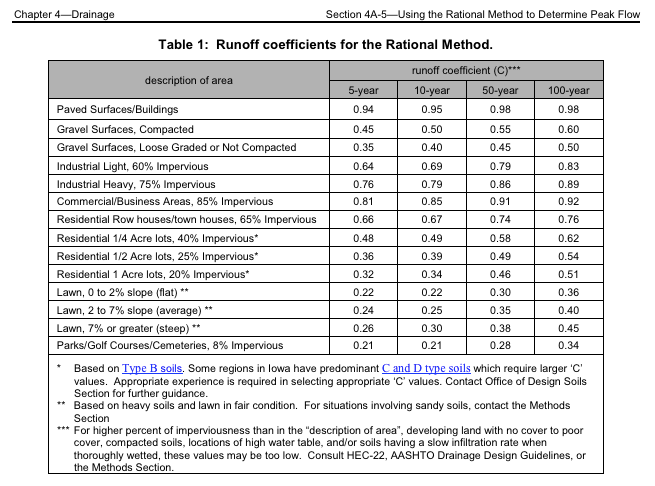
As you can see in the above chart, [impervious] paved surfaces gave a runoff coefficient of 0.94 for the 5-year storm event. Toward the bottom of this chart, "Lawn" and "Parks/Golf Courses/Cemeteries, 8% impervious" have a runoff coefficient of 0.21.
As far as I know, there is no such coefficient for pervious concrete to be used in the Rational Method. On the one hand, it isn't really necessary, as infiltration hardscapes may make the Rational Method less necessary. Or, perhaps the Rational Method will be adapted to vet and verify successful implementations of LID measures. In the meantime, it seems that a stand-in number is necessary - what if we were to use the "Parks/Golf Courses/Cemeteries, 8% impervious" 0.21 as a reference, and then include the >0.21, as it is less then 0.21, however it is unknown how much less at this point, for research has not yet been completed.
What do you think? Is this a reasonable way to discuss the Rational Method and pervious concrete?
** The limiting factor when dealing with pervious concrete is the subbase soil’s infiltration rate. Given enough area and enough reservoir base, it is possible to infiltrate a serious storm.
To chat directly with the author of this post, you can email me at Lauren@BayAreaPerviousConcrete.com
----
Sources: chart http://www.iowadot.gov/design/dmanual/04a-05.pdf
conversation and cocktail napkin - inspiration to post
Pervious Concrete Protects Trees!
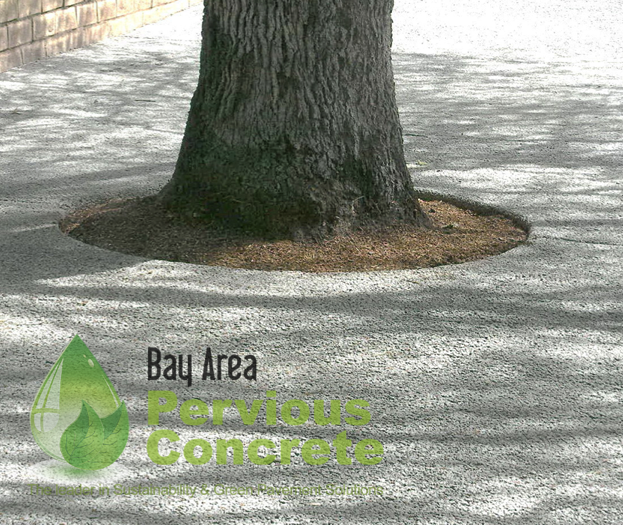
Normally, it is inadvisable to pave inside the drip line* of a tree. Depending on the size and age of a tree that can be a fairly sizable area. This can be problematic when traffic or use requires paving close to the tree. When traditional impervious pavements are installed near older established trees, it can spell the end of the tree. Is that true of pervious concrete?
It turns out there are two students at Texas A&M are doing this very research! Their recent work reveals pervious concrete does, in fact, enhance the growing conditions of established trees relative to traditional concrete. They poured traditional concrete around a few established trees, pervious concrete around a few established trees and left a few trees with no cover for the control, and measured tree health for a little over a year. The results: the trees surrounded by the pervious concrete had more trunk growth during the year then the trees surrounded by the traditional concrete!
What does this mean for you? The good news is that you can integrate pervious concrete paving into plant friendly parking lots and hardscape design, knowing that you are not compromising tree health. This also may open previously impossible parking or other paving possibilities due to the ability to extend the pervious concrete closer to the tree, well within the drip line. Yes, it can make installation tricky, but it can be done!
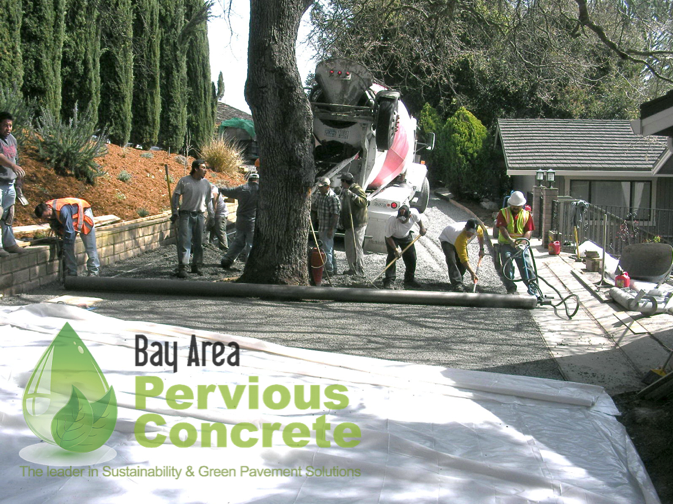
The takeaway is that pervious concrete is great for protecting mature trees. As you can see above, our clients think so too!
*If you are like me, you may have never heard of a tree's drip line before. The drip line refers to the outermost point of the tree's canopy where rain water runoff drips onto the ground below. With a large tree, that may extend many feet out from the trunk. Here is where I found this out.
Volder, A. & Watson, T. (in preparation). "Effect of porous concrete on diameter growth and gas exchange of mature American sweetgum (Liquidamber styraciflua) trees".
The Greenest Mix - Pervious Concrete can get GREENER!
Guest post, written by David Liguori
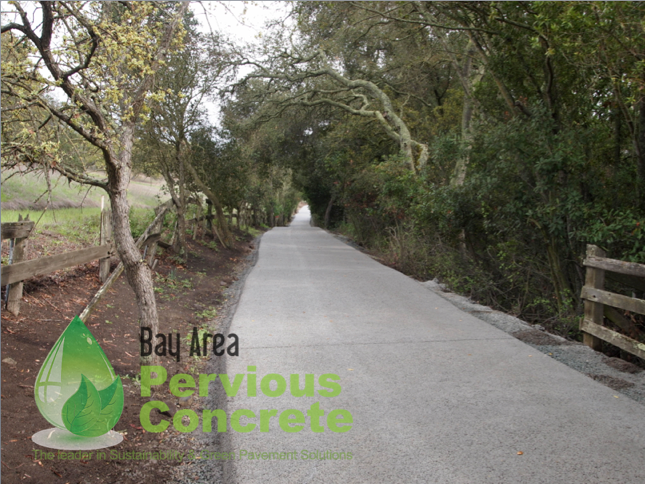
I wanted to give you a quick update on one of the more significant developments we’ve achieved lately.
In our continuing quest to further improve the performance of pervious concrete we have developed an “ultra-green” mix design for which we have recently received test data. The mix contains only 245 lbs. of cement, vs. 5-600 lbs. for regular concrete, and 245 lbs. of supplementary cementitious materials (scm). The scm consists of a combination of fly ash and slag, both industrial waste products.
We used this mix this past January on a 2,000 ft. long (by 10’ wide) driveway in Palo Alto(photo above) and 3 months ago on a 5,000 sqft. driveway in Los Altos Hills (photo below). They are both performing quite impressively. Absolutely no surface raveling, all of which typically takes place in the first month or two if it’s going to happen, water infiltration rates of 700-1,200” per hour and compressive strengths above 3,000 psi.
As I am sure you know the addition of the scm’s slows down the rate of early strength gains but ultimately results in higher overall strength. In the case of the ultra-green mix our 28 day numbers are in the 2,600 – 2,900 psi range and to our delight the recent 90 day test came in at an outstanding 3,520psi. These type of results and data continue to increase our confidence in pervious concrete as viable long term stormwater management solution.
If you would like more details, contact us here and we will get in touch!
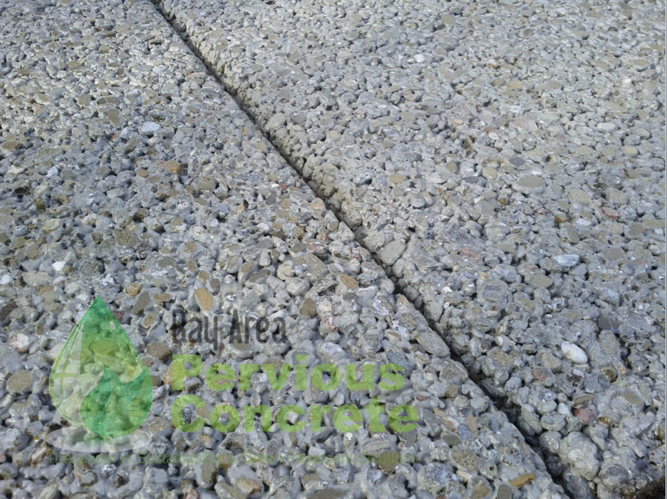
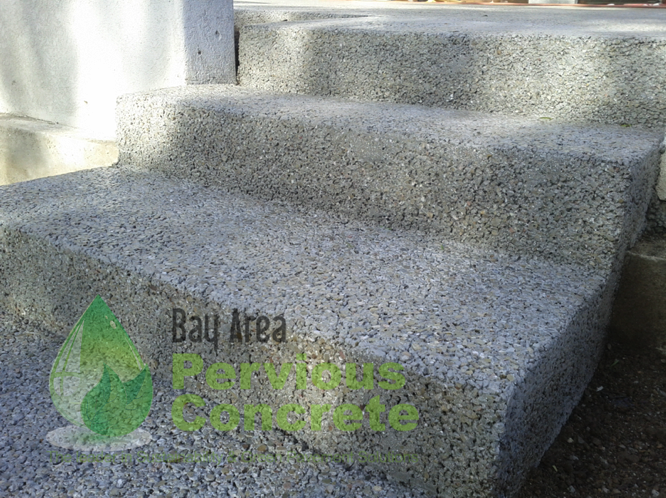
This is the video from the longest (and greenest) pervious concrete driveway in the world!
2 Symptoms of Failed Pervious Concrete - Raveling and Sealing
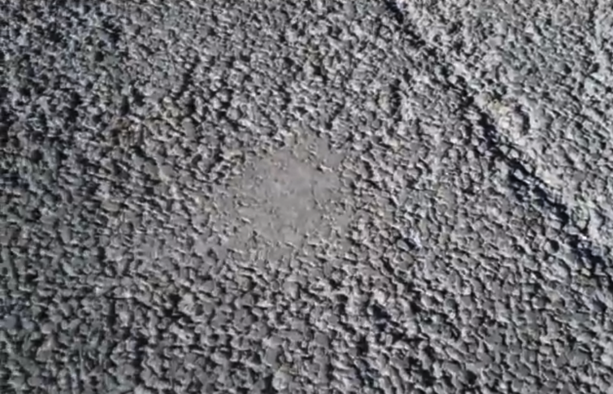
Recently it has come to our attention that there appears to be a discrepancy in what a high-quality pervious concrete jobs looks like, and what has been passed off as high quality but in fact is not at all quality.
Failed installations have 2 main features: raveling and sealing.
Raveling is when the aggregate comes off of the slab as cement coated gravel. That can be an indication of poor mix design, poor installation technique or even misunderstand the weather's impact on the day of the pour.
Sealing is when the water pools and does not go through. It is possible to have sealing at the top, where it looks blotchy, or just beneath the surface such that the finish looks appropriate but does not drain. This is an indication of poor mix design. An experienced pervious concrete installer understands how critical the proper mix is and works closely with his ready-mix partners to get it right.
As we at BAPC have said before, pervious concrete is a tricky material and only those who are qualified, experienced and show a commitment to ongoing learning about techniques and mix designs are able to install and place pervious concrete with a consistent high quality.
We have created this video, complete with an amazing sound track, to illustrate what failed pervious concrete looks like, and what successful pervious concrete looks like. If you would like us to come out and evaluate your slab, or better yet, if you would like it done well the first time, please contact us.
Bunyan Pervious Roast 2012 - hot days in the desert!
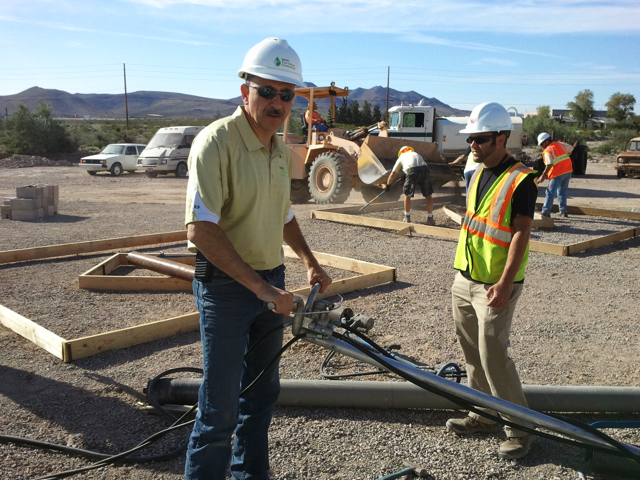
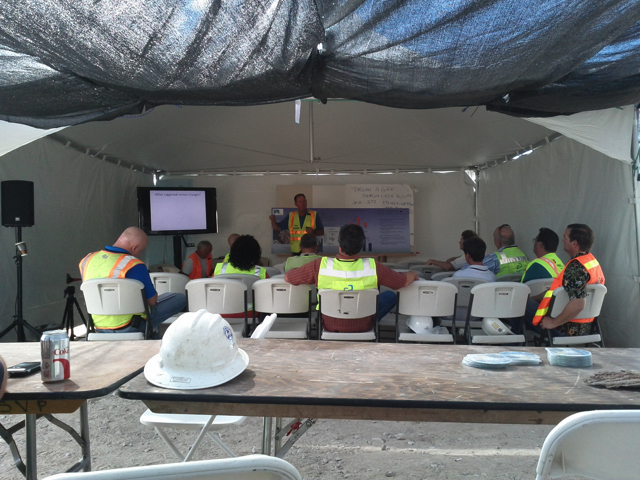
Out in the Nevada desert, outside of the Vegas we know is a far dustier affair known as the Pervious Roast. Dave Mitchell and team put together a spectacular 3+ days of speakers, pervious pours and food, which by all accounts was very informative and fun.
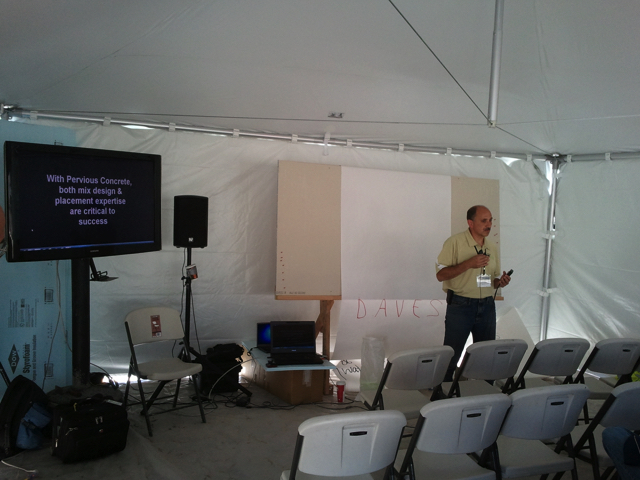
Our own David Liguori spoke at an un-scheduled moment to go over what goods and the not-so-good installations look and sound like. The video will be posted in an upcoming blog post. There were also presentations from Scott Erickson of Evolution Paving, and Jereme Montgomery.
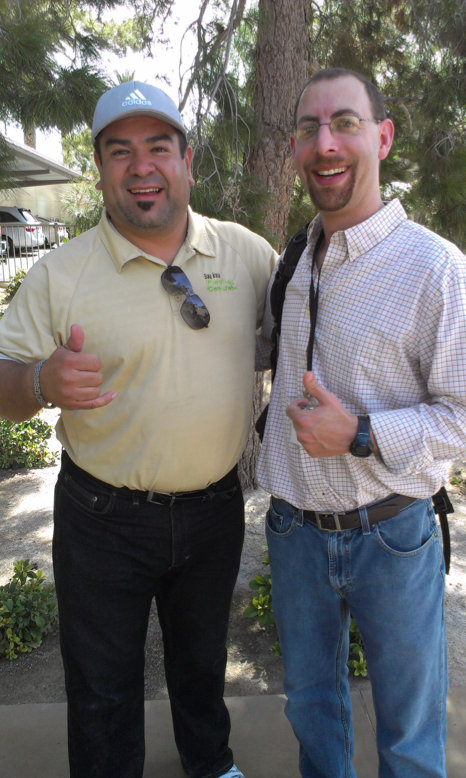
BAPC's Rob Estrada was able to snag a picture with Matt Offenberg, of bell-ringing fame. You can see how glad they are to head into the (air conditioned) NRMCA meeting.
~ Update: Lauren Wray
- Photo Credits: Robert Estrada, David Liguori, Lauren Wray
RC Ready Mix - Sample Slab with Decorative Pervious
We teamed up with RC Ready Mix to do a sample pour over in their yard, with their aggregate. They wanted to see how it went down, and we wanted to see how our mix design would work with their rocks. Not only did the installation turn out REALLY WELL, but Rob Estrada was able to really show us all a few MORE possibilities for decorative pervious concrete!
The first question is always ‘how well does it drain?’ Check out the video below to watch the front end loader dump a bucketful of water on the slab!
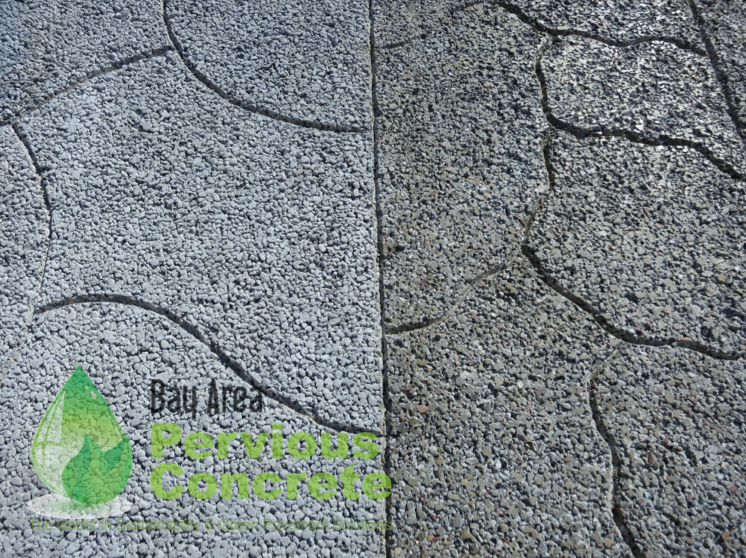
We agree with the driver, thumbs up! A few days later, Rob went over there to try some designs to see how they could look. We are well known for our Polished Pervious™, which you can see below, next to the Classic Pervious Concrete.
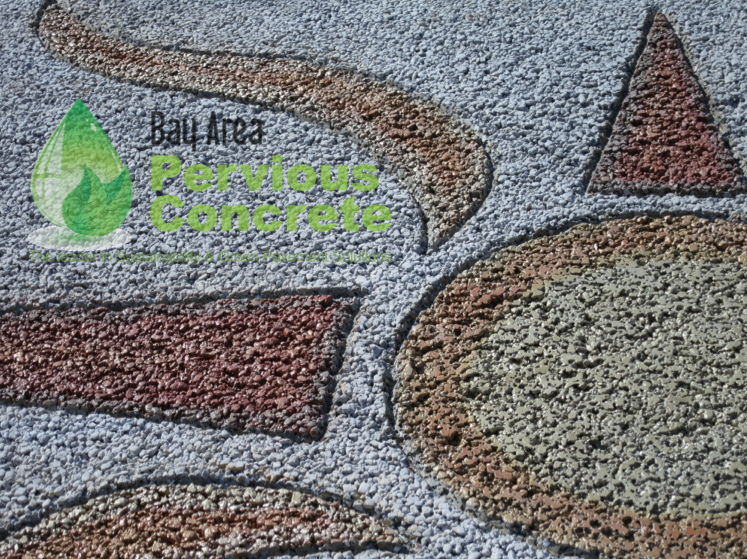
Then he added some designs. There are arc-like flagstone shapes on the left, and more rustic stone shapes on the right.
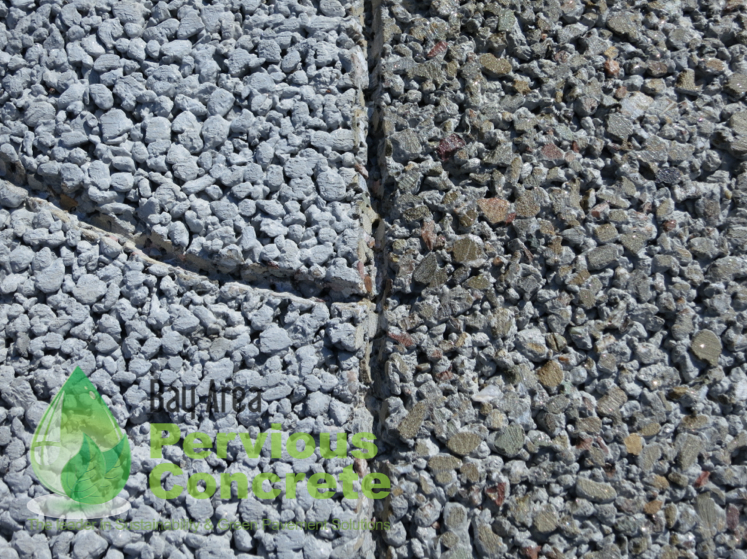
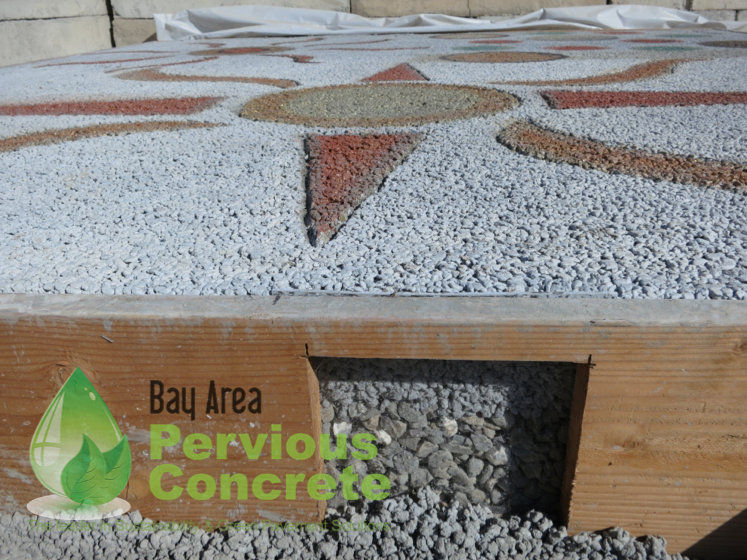
To get a closer look at the great texture, we took a close up. You can see the Polished Pervious Concrete ™, and then set into the pervious a pattern that was added well after the plastic was pulled up.
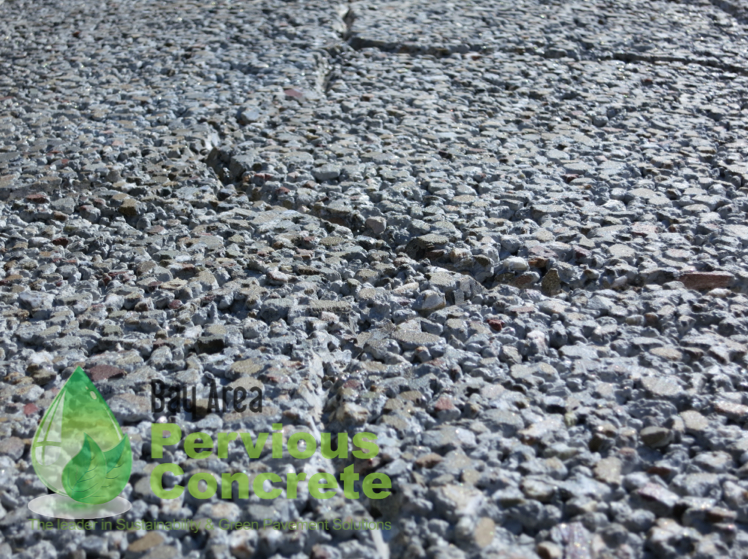
And here is where Rob really let loose! As Rob added these layers of color and texture to the Pervious Concrete, you can see the window that RC Ready Mix installed when they were framing. That allows one to see the water going through the layers of the Pervious Concrete System.

Here is most of the slab - you can see the suns and the moon and the gorgeous colors that were used!
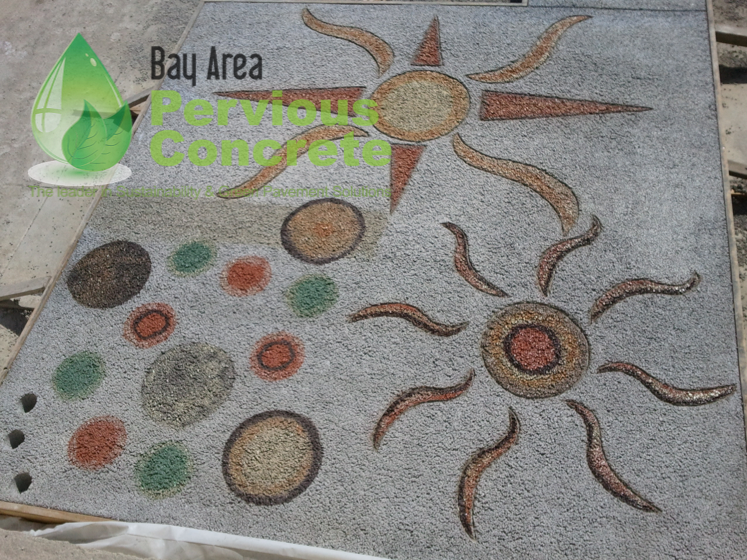
If you would like to see this in person, it will only be in the yard for a limited time. Contact us or RC Ready Mix in Livermore for more information.
Did you say Decorative Pervious Concrete?
Let us know what you think on Twitter @BayAreaPervious
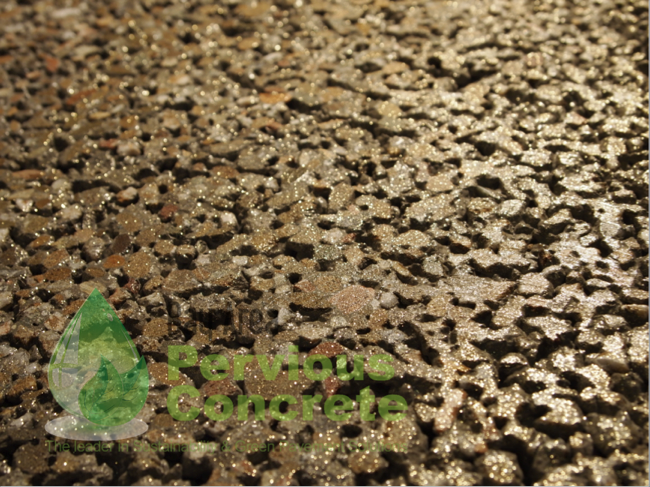
PCBC 2012 - A Great Conference!
Did you go? Did you see us there? What did you think of the booth?
Pervious concrete has an industry magazine!

Check out the most recent thinking about pervious concrete across the United States with great photos, articles and advertisements from local pervious experts in your area. PerviousPro is the brainchild of Dale Fisher and the people over at the NPCPA - the National Pervious Concrete Pavement Association. We even have an article written by Bay Area Pervious Concrete's own Lauren Wray.
Check out this issue here:
http://viewer.epaperflip.com/Viewer.aspx?docid=85d951d5-33b1-47c8-b174-a05200d37fc9
Let us know what you think!
4 Layers for Stormwater Management
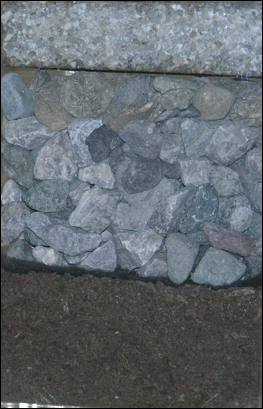
We at Bay Area Pervious Concrete have come a long way towards developing the Pervious Concrete as a viable Stormwater Management System. Going through this diagram, you can see where the water goes -- one of our most frequently asked questions.
Starting at the bottom-SOIL
We do soil infiltration tests before our jobs so we can understand how fast the water will soak in, underneath the pervious concrete. Once we understand the infiltration rates and soil composition, we can engineer the appropriate depths to excavate for the next layer, the drain rock.
Before we lay the drain rock we sometimes will lay a layer of GEOTECH Fabric, which adds a helpful barrier against some less porous soil types. We determine the need for this during the soil composition and infiltration tests.
Now for the DRAIN ROCK!
Drain rock is laid several to many inches thick, depending on the rain event to be captured, the soil type below, and how much impervious surface is draining into this slab. It is a very specific type of drain rock, not the typical base used under concrete which is impervious - we want to maintain about 40% air space to both allow water to pass through and give it place to "hang out" if the soil has a slow infiltration rate.
Finally the PERVIOUS CONCRETE
The pervious concrete is then laid on top of the drain rock, screeded and rolled into place and covered in plastic, where it will cure for at least a week.
Redwood Avenue - Driveway
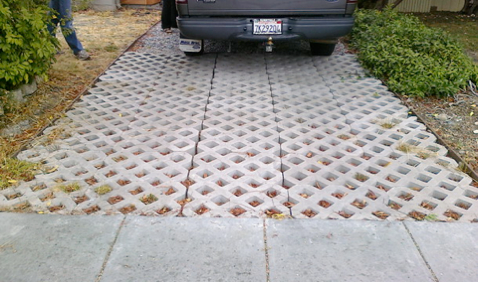
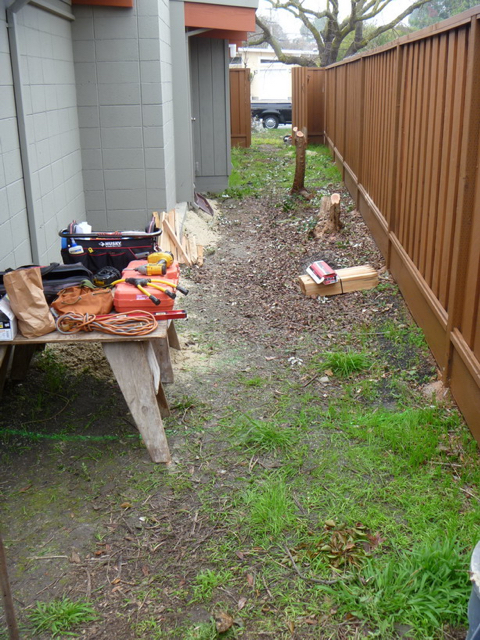
The client had flooding in the back and front of the house due to an uneven grade of the lot and excessive roof runoff.
Why Pervious Concrete?
He initially wanted a pervious concrete driveway because of impervious ground cover limitations in his city.
The Solution:
We designed a pervious concrete driveway and side yard that is also the retention pond for all of the roof and yard runoff.The pervious concrete water retention system captures 100% of their runoff from the roof AND the lot. They now have a dry front yard, back yard and they can grill just off the kitchen without puddles!